.png)
Fabric First vs Tech First: What Should Come First in a Retrofit?
May 13, 2025
3 min read
When it comes to retrofitting homes, there’s often a rush to install shiny new technology: solar panels, air source heat pumps, smart heating systems. And while these upgrades are all valuable, there's a simple truth we see time and time again — if the building fabric isn’t right, the tech won’t perform properly.
This is why we follow a fabric-first approach at Target Green. It’s not the most glamorous part of retrofit, but it’s the foundation for everything else.
What does “fabric first” mean?
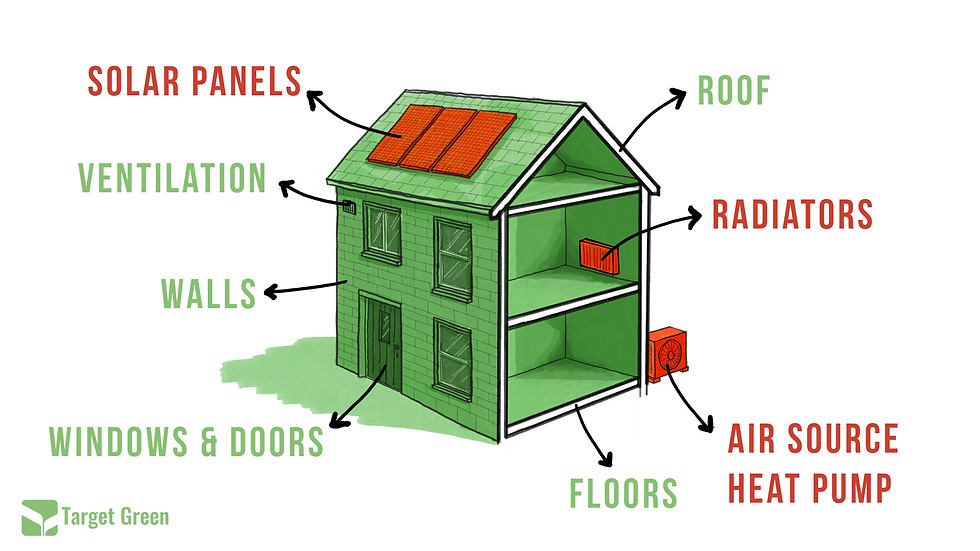
Fabric first means focusing on the parts of the building that use and lose energy every day - the walls, roof, windows, floors, and ventilation. It’s about making the building perform better before layering on additional technology. The goal is to reduce energy demand as much as possible through insulation, airtightness, and ventilation - then, once you’ve lowered the heat loss, you can design a heating system that fits the new, lower demand.
If you go in the other direction - installing a heat pump into a cold, draughty home - the system will struggle to keep up, it’ll cost more to run, and it won’t last as long. We’ve seen this mistake more than once.
Why fabric first works
In one of our recent projects, a block of flats had previously been upgraded with a modern heating system - but very little attention had been paid to insulation or ventilation. Within a year, residents were complaining that rooms were still cold, mould had started to form in corners, and bills weren’t coming down as expected. We were brought in to reassess the strategy.
The answer was clear: the heating system wasn’t the problem - the building fabric was. We carried out cavity wall assessments, upgraded the insulation, installed ventilation, and resolved cold bridges around key junctions. Only after these fabric upgrades did the property begin performing as it should.
It’s a reminder that technology can only perform as well as the environment it’s placed in.
Benefits of a fabric-first approach
✔️ Lower energy demand - Once heat loss is reduced, less energy is needed to heat the home.
✔️ Smaller, more efficient heating systems - You won’t need an oversized heat pump or boiler if the building is performing properly.
✔️ Improved comfort - Fewer draughts, warmer rooms, and more consistent internal temperatures.
✔️ Reduced risk of condensation and damp - With the right ventilation strategy alongside insulation, you can avoid moisture problems.
✔️ Long-term savings - Fabric upgrades tend to last longer and require less maintenance than mechanical systems.
When does tech come into play?
Once the fabric is sorted, the technology can shine. Heat pumps, for example, are an excellent low-carbon option - but they work best in well-insulated, airtight homes with low-temperature radiators or underfloor heating. Solar PV can provide even more benefit once your overall energy use has been reduced.
The key is sequencing: insulate first, ventilate properly, then design the right heating and renewables strategy. It’s not about choosing one over the other - it’s about doing them in the right order.
Final thoughts
We believe that retrofit should be strategic, not reactive. It’s tempting to chase big carbon savings with new tech, but the real gains - and the best results for residents - often start with the basics.
At Target Green, our PAS 2035:2023 compliant retrofit designs put fabric first. Because when the foundations are right, everything else performs better.
Need help planning a retrofit strategy that works long term? Get in touch for a free consultation.



Comments